Today we welcome the Year of the Tiger.
Happy New Year! Kung Hei Fat Choi!
This is what yearofthetiger.net says about this year:
According to the Chinese Zodiac, the Year of 2010 is the Year of the Tiger, which commences on February 14, 2010 and ends on February 2, 2011. The Tiger is the third sign in the Chinese Zodiac cycle, and it is a sign of bravery. This courageous and fiery fighter is admired by the ancient Chinese as the sign that keeps away the three main tragedies of a household. These are fire, thieves and ghosts.
Tigers are physically powerful, gracious, independent and brave, they are extremely bold animals. They are friendly and loving but can also selfish and short tempered. Tigers seek attention and power; frequently they are envious in a relation. Tigers live dangerously which often leads to trouble. They are intolerant, take risks and are always searching for excitement. Tigers are also instilled with a good dose of courage.
The Tiger has an overpowering attraction and is very kind and always takes on the character as protector. The Tiger flourishes by power and attention and takes advantage of all circumstances it gets itself into. The Tiger is a natural leader and loves to be the centre of attention. As a rebel it goes up against authority and speaks out about wrongs in society, and willingly puts up objections. Even if you don’t agree with the beliefs of the tiger you admire his way to protest.
Just as how their counterparts in the jungle are impulsive, so too are individuals born in the Chinese Year of the Tiger. When people think of tigers, it is their vigor and power that comes to mind first. But it has also been noted that tigers are known to share and are unselfish animals. The reason people admire the tiger is due to the fact that they are ferocious and domineering on the outside, but they are just as noble and distinguished on the inside. These are the same personality attributes that persons will have who are born in the Year of the Tiger.
People that are born in the Year of the Tiger are generally well liked because of their charismatic personalities. Often, failing at a given duty or being unproductive in his personal or professional life can cause a Tiger to experience a deep sense of depression.A Tiger is always at their happiest when they endeavor to climb the ladder of success. Attaining the top spot is his foremost purpose; being in a position of power is her ultimate goal. They are quick learners, need to be challenged and often prefer to work alone. Some Tigers tend to change careers more frequently because they get bored quite easily. They are natural born leaders and perform at their best if working towards positions of power and influence. So once there is no further room for progression, they will often move on to something else.
Anyone that is born in the Year of the Tiger is usually straightforward and outgoing by nature. They will never give up no matter how aggravated they may become. But, they are also full of suspicion and at times will take hasty action. Never lose sight of the fact that Tigers are smart and instinctive.
People born in the Year of the Tiger always take pride in being different from others, and normally demonstrate their originality best in their homes. Their homes are typically filled with exotic possessions. It is no surprise that one of the Tiger’s favorite gemstones is the cat’s eye, but tigers also love the sparkle of rubies and diamonds. They like to spend money, and also to share it. They can be very impulsive spenders because they know they can at all times make more.
The Year of the Tiger is the third year in the cycle of “Heavenly Branches”. Customarily, it is called “Yin”. Those born in the Year of the Tiger are compatible with the horse, dog, and dragons.

Sunday, February 14

Tuesday, January 12
Happy Birthday, Kathy!
My sister celebrates her birthday today. Happy birthday, Kathy! Don't forget to send pictures of your birthday dinner!
Sunday, January 10
Quick Intro to Feng Shui
I have recently been doing research on Fengh Shui and on how I can utilize it to enhance the positive energy in my would-be condo. This video provides a quick introduction to this topic. Just don't mind the occassional marketing pitch.
Saturday, January 9
Feast of the Black Nazarene
Today is the feast of the Black Nazarene in the Philippines. As devotees swell throughout the vicinity of the Minor Basilica of the Black Nazarene in Quiapo, Manila to catch at least a glimpse of the centuries old image of Christ, I was in Alabang scouting for appliances to furnish my new condo.
I don't have access to the news yet, but I am certain deaths and injuries will be reported as the procession progresses. Personally, I don't understand why the Catholic Church continues to tolerate this practice. I thought the church advocates putting utmost importance to life.
Don't get me wrong; I respect one's profession of faith. I acknowledge that I do not have any right to question how one chooses to relate with God. A pious devotion to God is always noble. However, why doesn't the Catholic Church promote the preservation of life in the light of the observance of this tradition?
I don't have access to the news yet, but I am certain deaths and injuries will be reported as the procession progresses. Personally, I don't understand why the Catholic Church continues to tolerate this practice. I thought the church advocates putting utmost importance to life.
Don't get me wrong; I respect one's profession of faith. I acknowledge that I do not have any right to question how one chooses to relate with God. A pious devotion to God is always noble. However, why doesn't the Catholic Church promote the preservation of life in the light of the observance of this tradition?
Friday, January 8
Green
Apart from green mind, I apparently have green thumb too.
In December, in a fit of buying impulsiveness, I bought three different species of hydrocultured indoor plants from Market! Market!. One month later, I swear that it was a purchase that I will never regret.
 In the scientific community this plant is known as Neodypsis lastelliana. In my home, he is fondly called Noynoy. And he likes to converse. I should probably have given the name Kris. [Yes, I talk to my plants. My mom said that's what she does with her orchids. Well... it runs in the family.]
Convinced? I am. In fact, I vowed that when I move to my new condo, I'll grow more indoor plants (although not necessary like the ones that Kamal Meattle mentioned). I promise to blog about that.
In December, in a fit of buying impulsiveness, I bought three different species of hydrocultured indoor plants from Market! Market!. One month later, I swear that it was a purchase that I will never regret.
You see, I thought that the plants wouldn't last a week. I thought I wouldn't muster the patience and the diligence to take care of them everyday. I thought I wouldn't be able to squeeze another chore in my busy schedule. But I was wrong -- I managed to keep them growing!
 In the scientific community this plant is known as Neodypsis lastelliana. In my home, he is fondly called Noynoy. And he likes to converse. I should probably have given the name Kris. [Yes, I talk to my plants. My mom said that's what she does with her orchids. Well... it runs in the family.]
While we are in this subject, let me share with you this interesting claim: with just three varieties of indoor plants, you can grow your own fresh air.
Convinced? I am. In fact, I vowed that when I move to my new condo, I'll grow more indoor plants (although not necessary like the ones that Kamal Meattle mentioned). I promise to blog about that.
Thursday, January 7
Mixed Emoticons
This weekend I am going to two furniture shops to finalize the designs of the custom-made pieces of furniture for my new condo. I'll probably be able to start the necessary renovation by the last week of January, but as early as now I am sorting out all the necessary furniture and fixtures. Wish me luck in the design discussions! I hope I could get a good deal.
For now, enjoy this inspiring video:
For now, enjoy this inspiring video:
Wednesday, January 6
Bye, Bye, Holidays!
The holidays are indeed over. I was back to work since Monday and today I feel that I need another round of holidays. Hmm... This same time last year I was in Bora (for an entire week!). Oh, how fast time flies!
I noticed that I have so far been consistent at writing my blog everyday. Studies have shown that it takes a month to form a habit. So far, so good. I am really getting the hang of it.
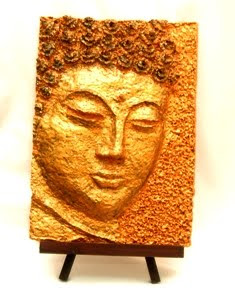 As I write this blog, I remember a gift which was given to me last year by a friend: Buddha papier-mâché in metallic gold glossy finish. It looks really good. I am sure it will look really good in my new living room. I can't wait to have it there. In less than two months I'll be moving to my new condo so at this point I am already mentally organizing stuff to keep, throw away, give or sell. This papier-mâché artwork will definitely earn its rightful place in my new condo.
My friend sells this type of papier-mâché art. You should see his work! If you are interested, drop me an email and I'll have him get in touch with you.
I noticed that I have so far been consistent at writing my blog everyday. Studies have shown that it takes a month to form a habit. So far, so good. I am really getting the hang of it.
 As I write this blog, I remember a gift which was given to me last year by a friend: Buddha papier-mâché in metallic gold glossy finish. It looks really good. I am sure it will look really good in my new living room. I can't wait to have it there. In less than two months I'll be moving to my new condo so at this point I am already mentally organizing stuff to keep, throw away, give or sell. This papier-mâché artwork will definitely earn its rightful place in my new condo.
Tuesday, January 5
How to Achieve Minimalism
I talked about embracing a minimalist lifestyle in my previous entry.
What exactly is minimalism and how can it be achieved in your home?
The concept is best explained by the following article which was written by Leo Babauta of Zen Habits. Leo is also the author of "The Power of Less: The Fine Art of Limiting Yourself to the Essential, in Business and in Life".
What exactly is minimalism and how can it be achieved in your home?
The concept is best explained by the following article which was written by Leo Babauta of Zen Habits. Leo is also the author of "The Power of Less: The Fine Art of Limiting Yourself to the Essential, in Business and in Life".
A Guide to Creating a Minimalist Home
One recent visitor saw my kitchen and remarked, “I’ve never seen a kitchen that looked so clean, so clear of stuff!” Well, I do my best to keep it clean, but the key is to remove the unnecessary stuff.
I can’t claim that my home is completely minimalist, but it surely isn’t cluttered, and most people I know would call it a pretty minimalist home.
For example, on the floor of my kitchen/dining room area are just a few essentials: dining table (clear of any clutter), chairs, some counter stools, a high chair, a step stool for the kids. On the counters are only the toaster, coffee maker and microwave.
Is this kind of minimalist home devoid of character and fun and life? Some might think so, but I get a strange satisfaction, a fulfillment, at looking around and seeing a home free of clutter. It’s calming, and liberating, and just nice.
Benefits of a Minimalist Home
I could probably go on for awhile about this, but let me just list a few key benefits:
• Less stressful. Clutter is a form of visual distraction, and everything in our vision pulls at our attention at least a little. The less clutter, the less visual stress we have. A minimalist home is calming.
• More appealing. Think about photos of homes that are cluttered, and photos of minimalist homes. The ones with almost nothing in them except some beautiful furniture, some nice artwork, and a very few pretty decorations, are the ones that appeal to most of us. You can make your home more appealing by making it more minimalist.
• Easier to clean. It’s hard to clean a whole bunch of objects, or to sweep or vacuum around a bunch of furniture. The more stuff you have, the more you have to keep clean, and the more complicated it is to clean around the stuff. Think about how easy it is to clean an empty room compared to one with 50 objects in it. That’s an extreme example, of course, as I wouldn’t recommend you have an empty room, but it’s just to illustrate the difference.
What a Minimalist Home Looks Like
This would vary, of course, depending on your taste and how extreme of a minimalist you want to be. I am a minimalist, but not to any extreme. But here are some characteristics of a minimalist home:
• Minimal furniture. A minimalist room would only contain a few essential pieces of furniture. A living room, for example, might only have a couch, another chair or love seat, a coffee table, a minimalist entertainment stand (not a huge one with a bunch of shelves), a television, and a couple of lamps. It could even contain less (couch, chairs, and coffee table, for example). A bedroom might have a simple bed (or even just a mattress), a dresser, and perhaps a night stand or book shelf.
• Clear surfaces. In a minimalist home, flat surfaces are clear, except for one or two decorations (see next item). There are not a whole bunch of knick knacks, and definitely not stacks of books or papers or other items.
• Accent decorations. A home completely clear of things would be a bit boring, actually. So instead of having a coffee table completely free of any objects, you could have a simple vase with a few flowers, for example. Or a clear desk might just have a family photo. An otherwise empty wall might have a tasteful piece of art (I use my dad’s artwork, as he’s a great artist).
• Quality over quantity. Instead of having a lot of stuff in your home, a minimalist would choose just a few really good things he loves and uses often. A really nice table, for example, is better than 5 pieces of press-board furniture.
How to Create a Minimalist Home
There are actually no set steps to making your home minimalist, except to change your philosophy and shoot for the ideals in the previous section above. But here are some tips that I would offer to anyone trying to shoot for minimalism:
• One room at a time. Unless you’re just moving into a place, it’s hard to simplify an entire house at once. Focus on one room, and let that be your center of calm. Use it to inspire you to simplify the next room, and the next. Then do the same outside!
• Start with furniture. The biggest things in any room are the furniture, so you should always begin simplifying a room by looking at the furniture. The fewer pieces of furniture, the better (within reason, of course). Think of which furniture can be eliminated without sacrificing comfort and livability. Go for a few pieces of plain, simple furniture (example of a minimalist coffee table) with solid, subdued colors.
• Only the essentials. Whether looking at your furniture or anything else in the room, ask yourself if the item is truly essential. If you can live without it, get it out. Try to strip the room down to its essentials — you can always add a few choice items beyond the essentials later.
• Clear floors. Except for the furniture, your floors should be completely clear. Nothing should clutter the floor, nothing should be stacked, nothing should be stored on the floor. Once you’ve gotten your furniture down to the bare essentials, clear everything else on the floor — either donate it, trash it, or find a place for it out of sight.
• Clear surfaces. Same thing with all flat surfaces. Don’t have anything on them, except one or two simple decorations (See Tip 9 below). Donate, trash or find an out-of-sight storage spot for everything else. It will make everything much, much more minimal-looking.
• Clear walls. Some people hang all kinds of stuff on their walls. No can do in a minimalist home. Clear your walls except for one or two simple pieces of nice artwork (see Tip 8 below).
• Store stuff out of sight. This has been mentioned in the above tips, but you should store everything you need out of sight, in drawers and cabinets. Bookshelves can be used to store books or DVDs or CDs, but shouldn’t have much else except a few simple decorations (not whole collections of things).
• Declutter. If you are clearing flat surfaces and the floor, and storing stuff in cabinets and drawers, you’ll probably want to declutter your storage areas too. You can do this in a later stage if you want. See How to Declutter for more.
• Simple artwork. To keep a room from being boring, you can put a simple painting, drawing or photo, framed with a subdued, solid color, on each wall if you want. Leave some walls bare if possible.
• Simple decorations. As mentioned in the above tips, one or two simple decorations can serve as accents for a minimalist room. A vase of flowers or a small potted plant are two classic examples. If the rest of your room has subdued colors, your accents could use a bright color (such as red, or yellow) to draw the eye and give a plain room a splash of energy.
• Plain window treatments. Bare windows, or simple, solid colored curtains, or simple, wooden blinds are good. Too much ornate stuff around the windows is clutter.
• Plain patterns. Solid colors are best for floor coverings (if you have any), furniture, etc. Complex patterns, such as flowers or checkers, are visual clutter.
• Subdued colors. As mentioned in Tip 9 above, you can have a splash of bright color in the room, but most of the room should be more subtle colors – white is classic minimalist, but really any solid colors that don’t stress the eyes is good (earth colors come to mind, such as blues, browns, tans, greens).
• Edit and eliminate. When you’ve simplified a room, you can probably do more. Give it a couple of days, then look at everything with a fresh eye. What can be eliminated? Stored out of sight? What’s not essential? You can come back to each room every few months, and sometimes you’ll discover things you can simplify even more.
• Place for everything. I’ve discussed this in other posts, but in a minimalist house, it’s important that you find a place for everything, and remember where those places are. Where does you blender go? Give it a spot, and stick with it. Aim for logical spots that are close to where the thing is used, to make things more efficient, but the key is to designate a spot.
• Sit back, relax, and enjoy. Once you’ve simplified a room, take a moment to look around and enjoy it. It’s so peaceful and satisfying. This is the reward for your hard work. Ahhhh. So nice!
Monday, January 4
MNMLSM
 An architect friend whom I met in an online forum drew me a floor plan for my condo unit. (Thanks, Freddie!) He rendered the details well and I was instantly impressed. After studying the details and imagining 'being in there', I felt that I needed more storage space. I informed him about it and he said that I have to let go of stuff to make the small space work for me.
He was right. I really need to let go many of my stuff in order to achieve a minimalist lifestyle. Minimalism and small spaces go well together like ham and cheese, Romeo and Juliet, pen and paper... okay, got the picture?
However, I realized I can only be a minimalist to a certain extent so I kept the argument to myself that I still need more storage space. Comparing my friend's design with the one that I have previously done, his work served to confirm majority of the details in my design. Therefore, I tweaked my existing design to incorporate some of the details in his. The outcome was a floor plan with elaborate storage, a smaller bedroom and a mini-office virtually outside the bedroom (I wanted the bedroom solely for sleeping). I also had to let go of the 8-foot distance between the TV and the La-z-boy. My consolation is that I am not really into TV or movies and that I am not a couch potato.
In the end, the new floor plan pretty much reflects my personality and suits my lifestyle. Nonetheless, I still need to embrace minimalism. And here's how I plan to do just that:
- Sell the stuff that I (can) no longer use but others will find useful;
- Throw away stuff that I no longer find useful; and
- Give to others the stuff that can still be used.
Sunday, January 3
Tools of the Trade
Interior design is not my profession, so I do not own any commercial top-of-the-line tools related to the job.
In designing the floor plan of my condo unit, I started with the use of Microsoft Visio. Pause. Okay, you can stop laughing now. Visio is actually quite sufficient for personal design needs. It has the basic features that I needed although it obviously cannot rival any professional interior design software (that's just my personal opinion and you cannot quote me on that).
I eventually learned of Amikasa: a free, browser-based interior design tool. It took me less than 15 minutes to learn to use the tool (it features a demo) and in no time I was rendering 3D model of my design. It is really cool, you should try it.

In designing the floor plan of my condo unit, I started with the use of Microsoft Visio. Pause. Okay, you can stop laughing now. Visio is actually quite sufficient for personal design needs. It has the basic features that I needed although it obviously cannot rival any professional interior design software (that's just my personal opinion and you cannot quote me on that).
I eventually learned of Amikasa: a free, browser-based interior design tool. It took me less than 15 minutes to learn to use the tool (it features a demo) and in no time I was rendering 3D model of my design. It is really cool, you should try it.

Another free tool that I used was Sweet Home 3D. It is a desktop application with more comprehensive features compared to Amikasa. This tool is really worth using. I never thought that free interior design software with commercial-grade features exists. This tool really rocks!
Subscribe to:
Posts (Atom)